
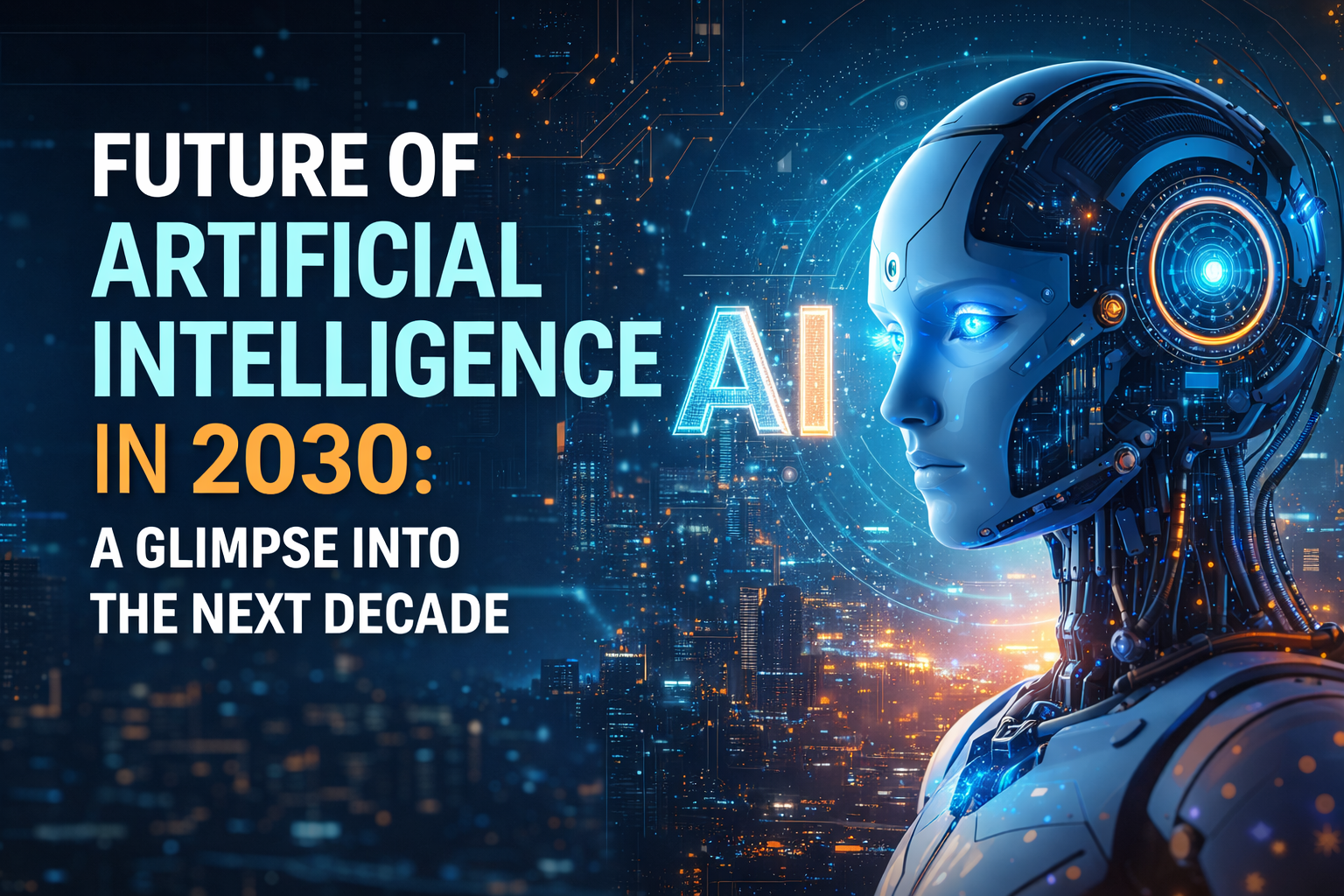
Introduction As we look toward 2030, Artificial Intelligence is no longer a “tool” we use; it has become the invisible fabric of our reality. The transition from the “Generative AI” boom of the mid-2020s to the “Agentic AI” era has fundamentally altered the global economy. By 2030, AI is predicted to contribute over $15 trillion to the global GDP, driven by breakthroughs in reasoning, autonomy, and physical integration.
The Shift to AGI-Lite (Artificial General Intelligence) While true AGI (human-level intelligence across all domains) remains a subject of debate, 2030 is defined by “Domain-Specific General Intelligence.” AI models can now reason through complex, multi-step problems—such as designing a sustainable city or discovering new life-saving drugs—without human guidance. These systems move beyond pattern matching to true causal reasoning.
AI in the Physical World: The Robotics Explosion By 2030, the “Brain” of AI has met its “Body.” Humanoid robots, powered by unified world models, are common in logistics, construction, and elder care. These robots learn from visual observation, meaning they can be taught a task simply by watching a human perform it once.
Key Predictions for 2030:
- Hyper-Personalized Education: Every student has an AI tutor that knows their cognitive strengths and adapts lessons in real-time.
- Predictive Healthcare: AI monitors biological data 24/7, predicting illnesses months before symptoms appear.
- The Autonomous Economy: Transportation and supply chains operate on a “zero-touch” model, optimized for carbon neutrality and speed.








Leave a Reply